
Thomas Boston
7 articles · 4 topics
Thomas Boston (1676–1732) was a Scottish minister whose theological clarity, pastoral tenderness, and remarkable inner life made him one of the most beloved figures in the history of the Church of Scotland. Born in Duns in Berwickshire, the son of a covenanting tradesman, he was educated at the University of Edinburgh and ordained in 1699.
He served as minister of Simprin — an obscure parish of about ninety families — from 1699 to 1707, then at Ettrick in the remote borderlands of Selkirkshire from 1707 until his death. Ettrick was poor, isolated, and initially resistant to his ministry, but Boston poured himself into it with extraordinary faithfulness, developing through decades of pastoral experience and theological reflection the works that would outlast his obscurity.
Human Nature in Its Fourfold State (1720), Boston's most famous work, traces the condition of humanity as originally created, as fallen, as regenerate, and as glorified — a schema drawn from a Puritan framework and applied with great pastoral warmth and insight. It became one of the most widely read works in Scotland and went through scores of editions over the next two centuries.
Boston is also remembered for his role in the "Marrow Controversy" of the 1720s, which divided the Church of Scotland. He discovered a copy of The Marrow of Modern Divinity — a seventeenth-century English compilation of Reformed teaching on free grace — in a parishioner's cottage, and his enthusiastic promotion of it led to a prolonged controversy about the relationship between law and gospel, free offer and election. Boston and the "Marrow Men" defended the free and sincere offer of Christ to all, against what they saw as a hyper-Calvinist restriction of the gospel. His Memoirs, published posthumously, offer an extraordinarily transparent account of the inner spiritual life of a man who wrestled deeply with God.
Books by Thomas Boston
14 books
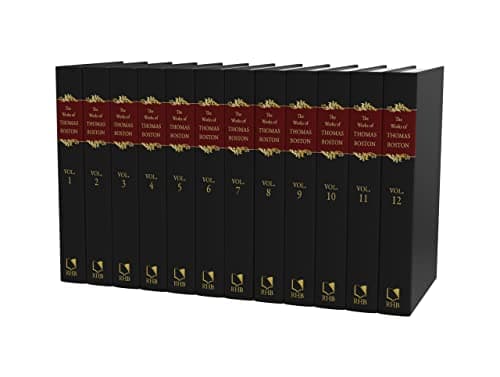
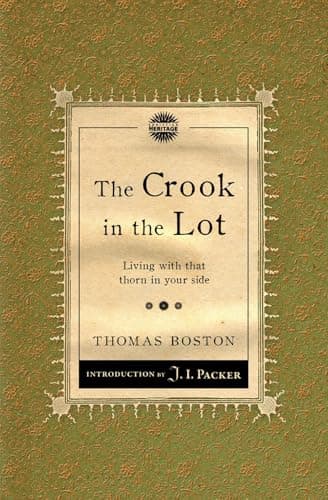
Grace Online Library is an Amazon Associate. Purchases made through these links help support the library at no extra cost to you.
Read Articles by Thomas Boston
Human Nature in Its Fourfold State - Death (Part I)
'For I know that thou wilt bring me to death, and to the house appointed for all living.' Job 30:23. I come now to discourse of man's eternal state, into which he enters by death. Of this entrance, Job takes a solemn serious view, in the words of the text, which contain a general truth, and a…
Human Nature in Its Fourfold State - Death (Part II)
Having thus discoursed of death, let us improve it in discerning the vanity of the world; in bearing up, with Christian contentment and patience under all troubles and difficulties in it; in mortifying our lusts; in cleaving unto the Lord with full purpose of heart, at all hazards, and in preparing…
Man's Utter Inability to Rescue Himself
For when we were yet without strength, in due time Christ died for the ungodly. Romans 5:6 No man can come to me, except the Father which hath sent me draw him. John 6. We have now had a view of the total corruption of man's nature, and that load of wrath which lies on him, that gulf of misery into…
The Sinfulness of Man's Natural State
DOCTRINE: MAN'S NATURE IS NOW WHOLLY CORRUPTED I shall confirm the doctrine of the corruption of nature. I shall hold the glass to your eyes, wherein you may see your sinful nature; which, though God takes particular notice of it, many quite overlook. Here we shall consult the Word of God, and…
The Sanctification of the Sabbath: Part I
I come now to show you how the Sabbath is to be sanctified. The Catechism tells us, 'It is to be sanctified by a holy resting all that day even from such worldly employments and recreations as are lawful on other days; and spending the whole time in public and private exercises of God's worship,…
The Sanctification of the Sabbath: Part II
I come now to consider the reasons annexed to the Fourth Commandment. And these, according to the Catechism, are, 'God's allowing us six days of the week for our own employments; his challenging a special propriety in the seventh; his own example; and his blessing the Sabbath day.' This command God…