
Loraine Boettner
43 articles · 11 topics
Loraine Boettner (1901–1990) was born on a farm in Linden, Missouri, and spent his formative years far from the centers of academic theology — yet he became one of the most widely read Reformed authors of the twentieth century. He studied at Princeton Theological Seminary during the final years of the old Princeton orthodoxy, receiving his Th.B. in 1928 and his Th.M. in 1929 under scholars who stood in the tradition of Charles Hodge and B. B. Warfield.
His magnum opus, The Reformed Doctrine of Predestination (1932), was written not as an academic treatise but as a thorough, accessible defense of the five points of Calvinism for ordinary pastors and laypeople. The book marshals Scripture, the Westminster Confession, and the writings of the Reformed tradition into a sustained argument for the sovereignty of God in salvation, and remains one of the most comprehensive popular treatments of the subject ever written in English.
Beyond predestination, Boettner wrote extensively on Roman Catholicism, on the millennium (arguing for postmillennialism), on immortality, and on the inspiration of Scripture. His work Roman Catholicism (1962) became a standard Reformed reference on the subject for decades. Though some of his scholarship has been superseded, his clarity, accessibility, and breadth of coverage secured his lasting place in the Reformed canon.
Books by Loraine Boettner
6 books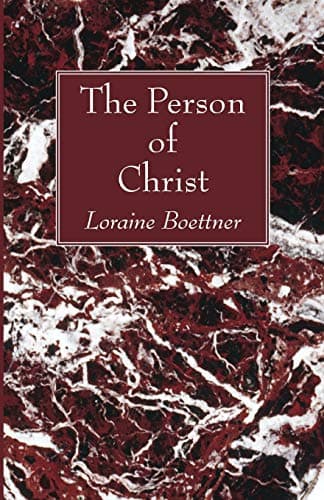
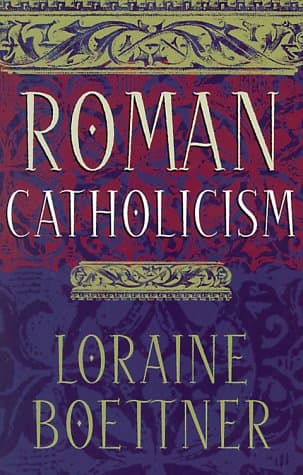
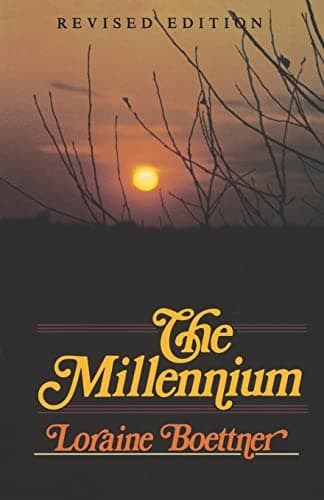
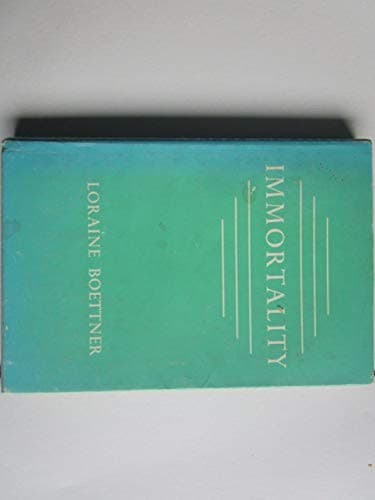
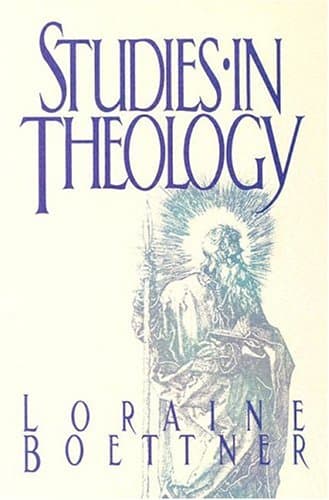
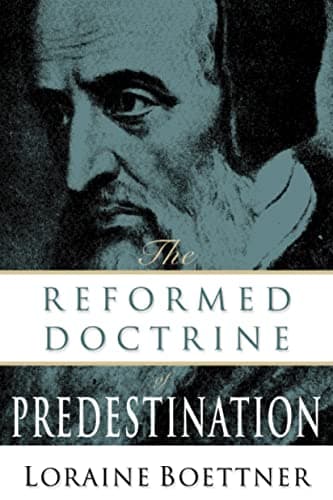
Grace Online Library is an Amazon Associate. Purchases made through these links help support the library at no extra cost to you.
Read Articles by Loraine Boettner
Postmillennialism: A Redeemed World or Race
On postmillennial principles a strong emphasis is thrown on the universality of Christ's work of redemption, and hope is held out for the salvation of an incredibly large number of the race of mankind. Since it was the world, or the race, which fell in Adam, it was the world, or the race, which was…
Postmillennialism: Approaches by Imperceptible Degrees
The golden age of righteousness is, of course, not to be thought of as beginning suddenly, or on any particular date. It cannot be pinpointed on the calendar, for it comes as the result of a long, slow process. 'The kingdom of heaven cometh not with observation' (Luke 17:20). It is 'first the…
Postmillennialism: Inadequate Terminology
One difficulty that we constantly face in this discussion is that of an inadequate terminology. The use of the prefixes 'pre-' and 'post', as attached to the word 'millennial,' is to some extent unfortunate and misleading. For the distinction involves a great deal more than merely 'before' or…
Postmillennialism: Introduction
[/caption] Broadly speaking there are three general systems which profess to set forth the teaching of Scripture regarding the Second Coming of Christ and the future course of the Kingdom. They are: Postmillennialism, Amillennialism, and Premillennialism. The essential presuppositions of the three…
Postmillennialism: Material Prosperity During the Millennium
The great material prosperity of which the Bible speaks as accompanying the millennial era will be, to a large extent, the natural result of the high moral and spiritual life of that time. These blessings too are from God. In numerous prophecies temporal blessings are expressly represented as…
Postmillennialism: Principles of Interpretation
It is clear that each of the millennial views has been held and at the present time is held by men concerning whose sincerity and loyalty to the evangelical faith there can be no doubt. That believing Christians through the ages, using the same Bible and acknowledging it to be authoritative, have…
Postmillennialism: Representative Theologians
We have said that each of the millennial views has been held by men of unquestioned sincerity and ability. Among Postmillennialists should be mentioned first of all the great Augustine, whose eminently sound interpretation of Scripture set the standard for the Church for nearly a thousand years. In…
Postmillennialism: Statement of the Doctrine
We have defined Postmillennialism as that view of the last things which holds that the Kingdom of God is now being extended in the world through the preaching of the Gospel and the saving work ok the Holy Spirit in the hearts of individuals, that the world eventually is to be Christianized, and…
Postmillennialism: The Final Apostasy and Rebellion?
A question which confronts both Post- and Premillennialism is this: Is there to be a brief but world-wide apostasy and rebellion at the end of the Millennium? Does the large proportion of the human race, after enjoying the high privileges which come with life during the millennial era, turn…
Postmillennialism: The Millennium Not A Perfect or Sinless State
There seems to be a general impression that when we speak of a Millennium we mean a time when the world will be sinless or practically so. We do believe that a time is coming when the people of the world in general will be Christians, a time when Satan will no longer be able to 'deceive the…
Postmillennialism: The Nature and Purpose of Prophecy
Also in connection with the subject of interpretation something should be said about the basic nature of prophecy. Premillennialists regard prophecy as history written beforehand. We prefer to say, however, that the primary purpose of prophecy is to inspire faith in those who see its fulfillment,…
Postmillennialism: The Old Testament Sacrificial System
The writer of the Epistle to the Hebrews has much to say about the endless repetition and the futility of the ancient sacrifices. He shows that their only value was to symbolize and point forward to the one true sacrifice that was to be made by Christ. 'We have been sanctified,' he said, 'through…
Postmillennialism: The Thousand Years A Symbolical Figure
As we read the book of Revelation figurative or symbolical expressions are met on every hand. The churches are symbolized by the seven golden candlesticks. Seven spirits before the throne are used to symbolize the fullness of the one Holy Spirit. We read of the Lamb having seven horns. We do not…
Postmillennialism: The Vastness of the Redeemed Multitude
The writer of the Apocalypse says: 'I saw, and behold, a great multitude, which no man could number, out of every nation and of all the tribes and peoples and tongues, standing before the throne and before the Lamb, arrayed in white robes, and palms in their hands; and they cried with a great…
Postmillennialism: The World is Growing Better
The redemption of the world is a long, slow process, extending through the centuries, yet surely approaching an appointed goal. We live in the day of advancing victory, although there are many apparent set-backs. As seen from the human viewpoint it often looks as though the forces of evil are about…
Calvinism in History: Before the Reformation
[/caption] It may occasion some surprise to discover that the doctrine of Predestination was not made a matter of special study until near the end of the fourth century. The earlier church fathers placed chief emphasis on good works such as faith, repentance, almsgiving, prayers, submission to…
Calvinism in History: Calvinism and Education
Again, history bears very clear testimony that Calvinism and education have been intimately associated. Wherever Calvinism has gone it has carried the school with it and has given a powerful impulse to popular education. It is a system which demands intellectual manhood. In fact, we may say that…
Calvinism in History: Calvinism and Representative Government
While religious and civil liberty have no organic connection, they nevertheless have a very strong affinity for each other; and where one is lacking the other will not long endure. History is eloquent in declaring that on a people's religion ever depends their freedom or their bondage. It is a…
Calvinism in History: Calvinism in America
When we come to study the influence of Calvinism as a political force in the history of the United States we come to one of the brightest pages of all Calvinistic history. Calvinism came to America in the Mayflower, and Bancroft, the greatest of American historians, pronounces the Pilgrim Fathers…
Calvinism in History: Calvinism in England
A glance at English history readily shows us that it was Calvinism which made Protestantism triumphant in that land. Many of the leading Protestants who fled to Geneva during the reign of Queen Mary afterward obtained high positions in the Church under Queen Elizabeth. Among them were the…
Calvinism in History: Calvinism in France
France, too, at that time, was all aglow with the free, bounding, restless spirit of Calvinism. 'In France the Calvinists were called Huguenots. The character of the Huguenots the world knows. Their moral purity and heroism, whether persecuted at home or exiled abroad, has been the wonder of both…
Calvinism in History: Calvinism in Holland
In the struggle which freed the Netherlands from the dominating power of the Papacy and from the cruel yoke of Spain we have another glorious chapter in the history of Calvinism and humanity. The tortures of the Inquisition were applied here as in few other places. The Duke of Alva boasted that…
Calvinism in History: Conclusion
We have now examined the Calvinistic system in considerable detail, and have seen its influence in the Church, in the State, in society, and in education. We have also considered the objections which are commonly brought against it, and have considered the practical importance of the system. It now…
Calvinism in History: John Calvin
John Calvin was born July 10, 1509, at Noyon, France, an ancient cathedral city about seventy miles northeast of Paris. His father, a man of rather hard and severe character, held the position as apostolic secretary to the bishop of Noyon, and was intimate with the best families of the…
The Atonement
The two great objectives to be accomplished by Jesus Christ in His mission to this world were, first, the removal of the curse under which mankind labored as a result of the disobedience and fall, and second, the restoration of men to the image and fellowship of God. Both of these were essential to…
The Atonement - Christ As Our Ransomer
In numerous places in Scripture Christ's work of redemption is declared to have been accomplished through the payment of a ransom. Nowhere is this set forth more clearly than in our Lord's own teaching. 'The Son of man came not to be ministered unto, but to minister, and to give His life a ransom…
The Atonement - The Active and Passive Obedience of Christ
We have said that the two great objectives to be accomplished by Christ in His mission to this world are, first, the removal of the curse under which His people labored as a result of the fall, and second, their restoration to the image and fellowship of God. It is perfectly evident that both of…
The Atonement - The Representative Principle
We have said that at the beginning of the race Adam stood not only for himself but as the federal head and representative of the entire human race which was to follow, and that Christ in His turn in both His active and passive obedience stood for all of those who were to be saved. This…
The Atonement - The Satisfaction View of the Atonement
Before we can have any adequate understanding or appreciation of the work that Christ has done for us it is necessary that we know something of the nature and effect of sin in the human soul. In substance the Bible tells us that sin is open and defiant rebellion against the law of God. There are,…
The Atonement - The Significance of Christ's Death
If we compare the manner in which the service of the world's greatest men have been rendered, and that in which Christ's work of redemption was rendered, we are immediately impressed with an outstanding contrast. While the service of men is rendered during their lifetime, and while Christ too, for…
The Inspiration Of Scripture - Part I: The Nature of Scripture Inspiration
The Nature of Scripture Inspiration The answer that we are to give to the question, 'What is Christianity?' depends quite largely on the view we take of Scripture. If we believe that the Bible is the very word of God and infallible, we will develop one conception of Christianity. If we believe that…
The Inspiration Of Scripture - Part II: The Writers Claim Inspiration
The Writers Claim Inspiration Our primary reasons for holding that the Bible is the inspired Word of God are that the writers themselves claim this inspiration, and that the contents of their messages bear out that claim. The uniformity with which the prophets insisted that the messages which they…
The Inspiration Of Scripture - Part III: The Nature of the Influence by Which Inspiration is Accomplished
The Nature of the Influence by Which Inspiration is Accomplished The evangelical Christian churches have never held what has been stigmatized the 'mechanical' theory of inspiration, despite the charges often made to the contrary. Instead of reducing the writers of Scripture to the level of machines…
The Inspiration Of Scripture - Part IV: The Alleged Errors in Scripture
The Alleged Errors in Scripture One of the most distressing things in present-day churches is that whereas in the religious debates of earlier days they used to argue about what the Bible said, never for a moment doubting that what it said was true, groups within the various churches are now…
The Inspiration Of Scripture - Part V: The Trustworthiness of the Bible
The Trustworthiness of the Bible After a survey of the alleged errors and discrepancies, including not only the typical ones just mentioned, but also many others, we assert, without fear of successful contradiction, that no one of these is real. As Christians we call this book the 'Holy Bible.' But…
The Inspiration Of Scripture - Part VI: The Plenary Inspiration of the Bible
The Plenary Inspiration of the Bible INCONSISTENT POSITION OF THE MODERNISTS We have already said that so-called Modernists or Liberals have no consistent stopping place. They must either go clear over to rationalism and barren negation, or they must turn back again to an authoritative Scripture.…