
Jonathan Edwards
21 articles · 9 topics
Jonathan Edwards (1703–1758) is widely regarded as the greatest theologian and philosopher America has produced. Born in East Windsor, Connecticut, the son and grandson of Congregationalist ministers, he entered Yale College at the age of thirteen and graduated at the top of his class. After a brief pastorate in New York, he joined his grandfather Solomon Stoddard at Northampton, Massachusetts, and succeeded him as pastor in 1729 — a position he would hold for over twenty years.
In the 1730s and 1740s, Northampton became the epicenter of remarkable spiritual awakening. Edwards's careful, eyewitness account of these events in A Faithful Narrative of the Surprising Work of God (1737) attracted attention on both sides of the Atlantic and helped prepare the ground for the transatlantic Great Awakening of the early 1740s. His sermon "Sinners in the Hands of an Angry God" (1741) is the most famous sermon in American history, though it represents only one dimension of a preaching ministry far richer and more varied than that single text suggests.
Dismissed from his Northampton pulpit in 1750 over a controversy about qualifications for communion, Edwards spent the final years of his active ministry as a missionary to Native Americans in Stockbridge, Massachusetts. It was there, paradoxically, that he produced some of his greatest theological works: Freedom of the Will (1754), The Great Christian Doctrine of Original Sin (1758), and the posthumously published The Nature of True Virtue and Concerning the End for Which God Created the World. He was appointed president of Princeton (then the College of New Jersey) in 1758, died weeks later from a smallpox inoculation, and left behind a theological legacy that has shaped Reformed and evangelical thought across the world for nearly three centuries.
Books by Jonathan Edwards
32 books
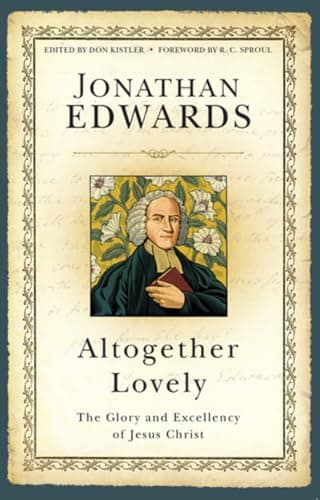



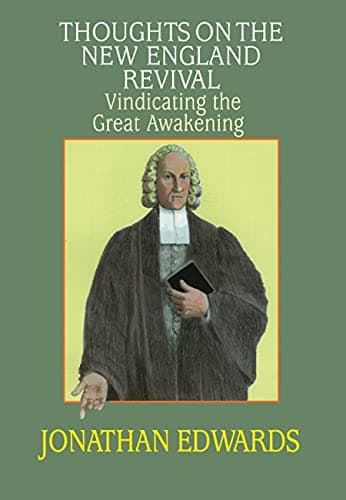


The Salvation of Souls: Nine Previously Unpublished Sermons on the Call of Ministry and the Gospel
2002
Grace Online Library is an Amazon Associate. Purchases made through these links help support the library at no extra cost to you.
Read Articles by Jonathan Edwards
Perpetuity and Change of the Sabbath: First Sermon - Part I
First Sermon: The Perpetuity of the Sabbath 'Now concerning the collection for the saints, as I have given order to the churches of Galatia, even so do ye. Upon the first day of the week, let every one of you lay by him in store, as God hath prospered him, that there be no gatherings when I come.'…
Perpetuity and Change of the Sabbath: First Sermon - Part II
2. Without doubt, one proportion of time is better and fitter than another for this purpose. One proportion is more suitable to the state of mankind, and will have a greater tendency to answer the ends of such times, than another. The times may be too far asunder. I think human reason is sufficient…
Perpetuity and Change of the Sabbath: Second Sermon
Second Sermon: The Change of the Sabbath (excerpts) 'Now concerning the collection for the saints, as I have given order to the churches of Galatia, even so do ye. Upon the first day of the week, let every one of you lay by him in store, as God hath prospered him, that there be no gatherings when I…
Perpetuity and Change of the Sabbath: Third Sermon - Part I
Third Sermon: Application 'Now concerning the collection for the saints, as I have given order to the churches of Galatia, even so do ye. Upon the first day of the week, let every one of you lay by him in store, as God hath prospered him, that there be no gatherings when I come.' I Corinthians…
Perpetuity and Change of the Sabbath: Third Sermon - Part II
Inquiry. How ought we to keep the sabbath? Answer. 1. We ought to be exceedingly careful on this day to abstain from sin. Indeed, all breaches of the sabbath are sinful; but we speak now of those things which are in themselves sinful, or sinful upon other accounts, besides that they are done upon…
A Faithful Narrative of the Surprising Work of God – Section I
The Narrative is divided into three sections: I. A General Introductory Statement, II. The Manner of Conversions Various, Yet Bearing a Great Analogy, III. This Work Further Illustrated in Particular Instances. Rev. and Honored Sir, Having seen your letter to my honored Uncle Williams of Hatfield,…
A Faithful Narrative of the Surprising Work of God – Section II
SECTION II. The Manner of Conversion Various, Yet Bearing a Great Analogy. I therefore proceed to give an account of the manner of persons being wrought upon; and here there is a vast variety, perhaps as manifold as the subjects of the operation; but yet in many things there is a great analogy in…
A Faithful Narrative of the Surprising Work of God – Section III
SECTION III. This Work Further Illustrated in Particular Instances. But to give a clear idea of the nature and manner of the operation of God's Spirit, in this wonderful effusion if it, I would give an account of two particular instances. The first is an adult person, a young woman whose name was…
An Account of the Revival of Religion in Northampton in 1740 - 1742
version of sinners, and great revivings, quickenings, and comforts of professors, and for extraordinary external effects of these things. It was a very frequent thing to see a house full of out-cries, faintings, convulsions, and such like, both with distress, and also with admiration and joy. It…
God's Sovereignty in the Salvation of Men (Romans 9:18)
[/caption] Sermon IV of Seventeen Occasional Sermons, in The Works of Jonathan Edwards, Volume Two, The Banner of Truth Trust, Reprinted 1995, pp. 849-854. ROMANS 9:18. Therefore hath he mercy on whom he will have mercy, and whom he will he hardeneth. THE apostle, in the beginning of this chapter,…
Treatise on Grace - Part I: Shewing That Common and Saving Grace Differ, Not Only in Degree, But in Nature and Kind
CHAPTER I. SUCH phrases as common grace, and special or saving grace, may be understood as signifying either diverse kinds of influence of God's Spirit on the hearts of men, or diverse fruits and effects of that influence. The Spirit of God is supposed sometimes to have some influence upon the…
Treatise on Grace - Part II: Shewing Wherein All Saving Grace Does Summarily Consist
CHAPTER II. THE next thing that arises for consideration is, What is the nature of this principle in the soul that is so entirely diverse from all that is naturally in the soul? Here I would observe,— 1. That that saving grace that is in the hearts of the saints, that within them above nature, and…
Treatise on Grace - Part III: Shewing How a Principle of Grace is from the Spirit of God
CHAPTER III. I. That this holy and Divine principle, which we have strewn does radically and summarily consist in Divine Low, comes into existence in the soul by the power of God in the influences of the Holy Spirit, the Third Person in the blessed Trinity, is abundantly manifest from the…
Personal Narrative of Jonathan Edwards
Jonathan Edwards' own account of his early years and testimony to his own saving faith in Christ. I had a variety of concerns and exercises about my soul from my childhood; but had two more remarkable seasons of awakening, before I met with that change by which I was brought to those new…
The Resolutions of Jonathan Edwards (1722 - 1723)
able, contented, easy, compassionate, generous, humble, meek, modest, submissive, obliging, diligent and industrious, charitable, even, patient, moderate, forgiving, sincere temper; and to do at all times what such a temper would lead me to. Examine strictly every week, whether I have done so.…
The Spirit of Charity is a Humble Spirit – Part I
'Charity vaunteth not itself, is not puffed up, doth not behave itself unseemly.' — 1 Corinthians 13:4, 5 HAVING shewn the nature and tendency of charity or Christian love, in respect to our receiving injury, and doing good to others—that it 'suffering long and is kind;' and also with respect to…
The Spirit of Charity is a Humble Spirit – Part II
II. That the spirit of charity is an humble spirit.— And this I would do in two particulars: first, by shewing how the spirit of charity, or divine love, implies and tends to humility and then by shewing how such exercises of this charity as the gospel tends to draw forth do especially imply and…