
John Murray
16 articles · 8 topics
John Murray (1898–1975) was a Scottish-born theologian who became, through nearly four decades of teaching at Westminster Theological Seminary, one of the most precise and careful Reformed systematic theologians of the twentieth century. Born on a croft in Sutherland in the Scottish Highlands, he was educated at the Free Church College in Glasgow and then at Princeton Seminary, where he came under the influence of B. B. Warfield and Geerhardus Vos.
He joined the founding faculty of Westminster Theological Seminary in Philadelphia in 1930 and remained there until his retirement to Scotland in 1966 — thirty-six years during which he shaped the theological formation of hundreds of Reformed ministers across North America and beyond. His seminars were legendarily demanding; students said he rarely smiled, but that every sentence he spoke was worth writing down.
His commentary on Romans, published in two volumes in 1959 and 1965, is universally acknowledged as a masterpiece of careful, rigorous exegesis in the Reformed tradition — precise, thorough, and deeply reverent. Redemption Accomplished and Applied (1955) is perhaps the clearest and most economical account of the Reformed doctrine of salvation ever written, tracing the work of Christ from the cross through its application in the life of the believer. His collected writings on topics from covenant theology to systematic theology to ethics fill four volumes and reward the most careful reader. Murray was a man of few words and immense depth.
Books by John Murray
17 books


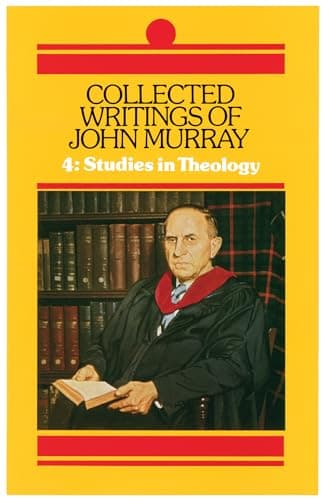


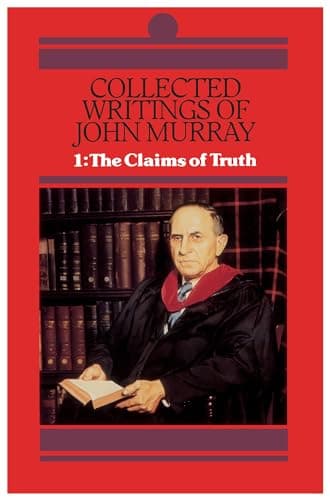
Grace Online Library is an Amazon Associate. Purchases made through these links help support the library at no extra cost to you.
Read Articles by John Murray
Arminianism and the Atonement
Atonement is to be defined in terms of sacrifice, reconciliation, redemption, satisfaction to divine justice, discharge of debt, and thus defined it is for those whom God hath predestinated to life, namely, the elect. They are saved because Christ by his redemptive work secured their salvation. The…
Arminianism in the Pilgrimage of the Soul
To some it might seem unnecessary and even wickedly controversial to thrust upon readers any discussion of Arminianism. This might appear to be the case for two reasons. First of all, why should we revive ancient controversies and thereby provoke animosities that have long since died the death of…
The Reformed Faith and Arminianism: Part I
From a series which appeared in The Presbyterian Guardian in 1935-1936. Arminianism derives its name from James Arminius, a minister of the Reformed Church in Holland who lived from 1560 to 1609. He became Professor of Divinity in the University of Leyden, in 1603. It was particularly during the…
The Reformed Faith and Arminianism: Part II
Limited Atonement The second article of the Arminian Remonstrance of 1610 concerned the question of the extent of the atonement. It reads as follows: 'Article II. That, agreeably thereto, Jesus Christ, the Savior of the world, died for all men and for every man, so that he has obtained for them…
The Reformed Faith and Arminianism: Part III
Total Depravity The third of the five points of Arminianism concerns the question of original sin or human depravity. In several of the formal statements of the Arminian position as it bears upon human depravity, the real import of that position is not readily detected. As William Cunningham points…
The Calling of the Westminster Assembly
It should be conceded, without fear of intelligent contradiction, that the Westminster Confession of Faith, Larger and Shorter Catechisms are the finest creedal formulations of the Christian Faith that the church of Christ has yet produced. This is not to deny that in certain particulars some other…
The Catechisms of the Westminster Assembly
In the records of the Westminster Assembly we find a great deal of debate concerning catechism long before the date upon which the Assembly actually turned to the composition of the two Catechisms with which we are familiar. This prolonged study of catechism was not, however, lost labor; in very…
The Westminster Standards
The Westminster Assembly was wholly British in its composition. It should not, however, be thought that these British divines of the seventeenth century pursued their task and framed the standards of which they were the authors in aloof indifference to the Reformed churches on the continent of…
The Work of the Westminster Assembly
The Westminster Assembly first convened on July 1, 1643. For the first three months the Assembly was largely occupied with the revision of the Thirty-Nine Articles of the Church of England. Perhaps the two most important events during the course of these three months were the adoption of the Solemn…
The Atonement
Atonement is the term that has come to be widely used to denote the substitutionary work of Christ which culminated in the sacrifice of Calvary. The term occurs frequently in the A.V. of the Old Testament as the rendering of the Hebrew root kaphar but only once in the New Testament (Rom. 5:11)…
The Nature of the Atonement
[/caption] In dealing with the nature of the atonement it is well to try to discover some comprehensive category under which the various aspects of Biblical teaching may be subsumed. The more specific categories in terms of which the Scripture sets forth the atoning work of Christ are sacrifice,…