
John Bunyan
2 articles · 2 topics
John Bunyan (1628–1688) was a tinker's son from Elstow in Bedfordshire whose imprisonment became the occasion for the most widely read work of Christian literature in the English language. Born into poverty and largely uneducated, Bunyan served in the Parliamentary army during the Civil War and in the late 1640s underwent a spiritual crisis of extraordinary intensity — years of doubt, terror, and eventual assurance — that he would later describe in his spiritual autobiography, Grace Abounding to the Chief of Sinners (1666).
He became a Nonconformist preacher associated with the Bedford Meeting, a Baptist congregation, and was arrested in 1660 for preaching without a license. He spent twelve years in Bedford Jail — refusing liberty when it was offered on condition of stopping his preaching — and during that time wrote Grace Abounding and began The Pilgrim's Progress. Released under the Declaration of Indulgence in 1672, he was imprisoned again briefly in 1676, during which time he is thought to have completed The Pilgrim's Progress, published in 1678.
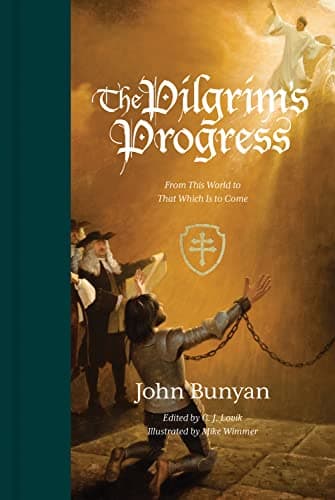
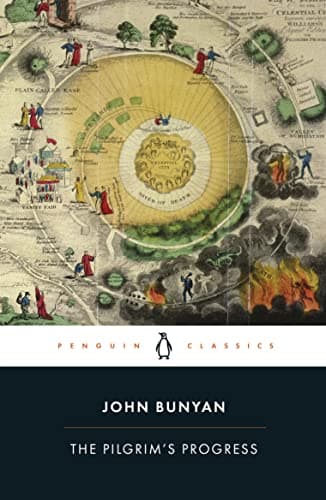
The Pilgrim's Progress is, after the Bible, the most published and translated book in the history of Christianity, having been translated into over 200 languages. The allegory of Christian's journey from the City of Destruction to the Celestial City captures the entire evangelical experience — conviction of sin, conversion, temptation, backsliding, fellowship, suffering, and triumph — with a vividness and psychological accuracy that has made it immediately recognizable to readers across every culture and century. Bunyan also wrote The Holy War, The Life and Death of Mr. Badman, and dozens of other tracts and treatises, all in the same accessible, concrete, vivid prose shaped by the English Bible and his own spiritual experience.
Books by John Bunyan
19 books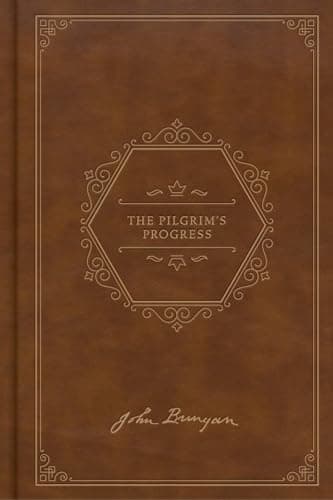

Grace Online Library is an Amazon Associate. Purchases made through these links help support the library at no extra cost to you.