
J. Gresham Machen
13 articles · 7 topics
John Gresham Machen (1881–1937) was the most intellectually formidable defender of confessional Presbyterianism in the twentieth century, and the man who drew the sharpest line between genuine Christianity and the theological liberalism that had taken over the mainline Protestant denominations by the 1920s.
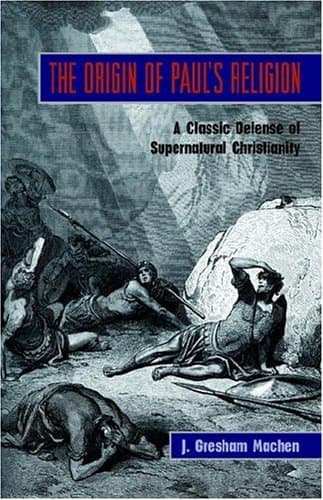
Born into a cultured Baltimore family, Machen studied at Johns Hopkins, Princeton Seminary, and in Germany under some of the leading liberal scholars of the day — an experience that clarified rather than shook his convictions. He joined the New Testament faculty at Princeton Seminary in 1906, where he became one of its most admired teachers and produced, in The Origin of Paul's Religion (1921) and The Virgin Birth of Christ (1930), two of the most rigorous works of conservative New Testament scholarship of the era.
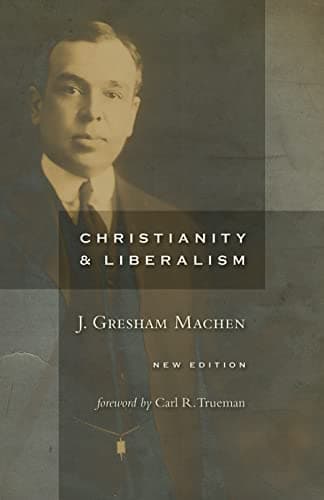
His Christianity and Liberalism (1923) is his most important book — a precise, relentless argument that the theological liberalism dominant in Protestant churches was not a form of Christianity at all, but an entirely different religion that had appropriated Christian language while abandoning Christian substance. The book made him famous and deeply controversial. When the northern Presbyterian Church refused to discipline missionaries who denied core doctrines, Machen founded the Independent Board for Presbyterian Foreign Missions in 1933, was suspended from the ministry by the Presbyterian Church USA in 1936, and went on to found what became the Orthodox Presbyterian Church and Westminster Theological Seminary — institutions he believed would preserve the Reformed faith the mainline had surrendered.
Books by J. Gresham Machen
18 books
Grace Online Library is an Amazon Associate. Purchases made through these links help support the library at no extra cost to you.
Read Articles by J. Gresham Machen
Christianity and Liberalism - Doctrine
Modern liberalism in the Church, whatever judgment may be passed upon it, is at any rate no longer merely an academic matter. It is no longer a matter merely of theological seminaries or universities. On the contrary its attack upon the fundamentals of the Christian faith is being carried on…
Christianity and Liberalism - God and Man
It has been observed in the last chapter that Christianity is based on an account of something that happened in the first century of our era. But before that account can be received, certain presuppositions must be accepted. The Christian gospel consists in an account of how God saved man, and…
Christianity and Liberalism - Introduction
The purpose of this book is not to decide the religious issue of the present day, but merely to present the issue as sharply and clearly as possible, in order that the reader may be aided in deciding it for himself. Presenting an issue sharply is indeed by no means a popular business at the present…
Christianity and Liberalism - Salvation
It has been observed thus far that liberalism differs from Christianity with regard to the presuppositions of the gospel (the view of God and the view of man), with regard to the Book in which the gospel is contained, and with regard to the Person whose work the gospel sets forth. It is not…
The Atonement
'For as many as are of the works of the law are under a curse; for It Is written, 'Cursed is everyone who does not abide by all the things written in the book of the law to do them.' But that in the law no one is justified with God is clear, because 'the just shall live by faith'; but the law is…
The Doctrine of the Atonement - Part I
THE priestly work of Christ, or at least that part of it in which He offered Himself up as a sacrifice to satisfy divine justice and reconcile us to God, is commonly called the atonement, and the doctrine which sets it forth is commonly called the doctrine of the atonement. That doctrine is at the…
The Doctrine of the Atonement - Part II (The Active Obedience of Christ)
LAST Sunday afternoon, in outlining the Biblical teaching about the work of Christ in satisfying for us the claims of God’s law, I said nothing about one very important part of that work. I pointed out that Christ by His death in our stead on the cross paid the just penalty of our sin, but I said…
The Doctrine of the Atonement - Part III (The Bible and the Cross)
HAVING observed last week what are the leading views that have been held regarding the cross of Christ, we turn now to the Bible in order to discover which of these views is right. Did Jesus on the cross really take our place, paying the penalty of God’s law which justly rested upon us? That is the…