
Charles Hodge
13 articles · 7 topics
Charles Hodge (1797–1878) was the dominant figure in American Reformed theology for over half a century, teaching at Princeton Theological Seminary from 1820 until his death — fifty-eight years during which he taught an estimated three thousand students and shaped the theological character of American Presbyterianism more than any other individual.
Born in Philadelphia and educated at Princeton College and Princeton Seminary, Hodge spent two years studying in Germany in the early 1820s, engaging the rising tide of German critical theology and coming away confirmed in his Calvinist orthodoxy but with a broader understanding of the theological landscape. On his return he threw himself into teaching, writing, and editing the Biblical Repertory and Princeton Review, which under his direction became the most important Reformed theological journal in America.
His three-volume Systematic Theology (1872–73), published when he was in his seventies, is a monument of comprehensive theological learning — covering every major locus of Christian doctrine from a rigorously Reformed and confessionally Presbyterian perspective. His commentaries on Romans, Ephesians, and the Corinthian letters remain valuable for their careful exegesis and clear doctrinal application. Hodge was also a committed churchman who played a central role in the controversies over slavery, the nature of the church, and the relation of faith and science that convulsed American Presbyterianism in his era. His famous boast that "no new idea" had ever originated at Princeton Seminary — meaning Princeton had held firm to the faith once delivered — was both a point of pride and a target for critics.
Books by Charles Hodge
14 books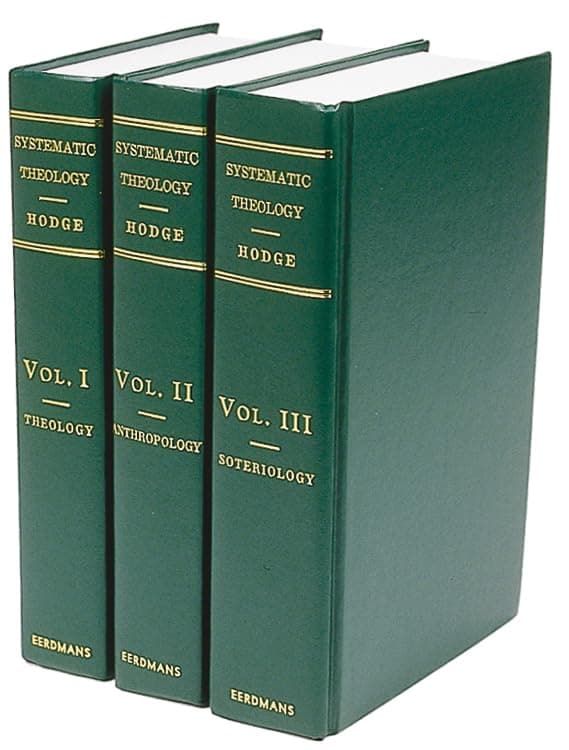


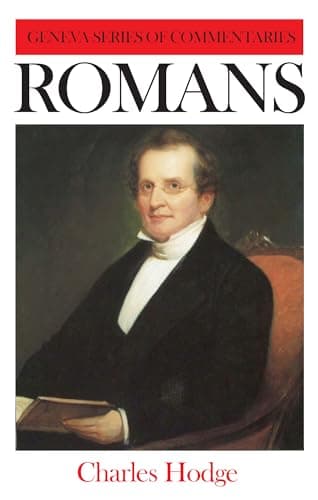
Grace Online Library is an Amazon Associate. Purchases made through these links help support the library at no extra cost to you.
Read Articles by Charles Hodge
The Covenant of Grace - Covenant of Redemption
By this is meant the covenant between the Father and the Son in reference to the salvation of man. This is a subject which, from its nature, is entirely beyond our comprehension. We must receive the teachings of the Scriptures in relation to it without presuming to penetrate the mystery which…
The Covenant of Grace - Different Dispensations
Although the covenant of grace has always been the same, the dispensations of that covenant have changed. The first dispensation extended from Adam to Abraham. Of this period we have so few records, that we cannot determine how far the truth was revealed, or what measures were adopted for its…
The Covenant of Grace - Different Views of the Nature of this Covenant
It is assumed by many that the parties to the covenant of grace are God and fallen man. Man by his apostasy having forfeited the favour of God, lost the divine image, and involved himself in sin and misery, must have perished in this state, had not God provided a plan of salvation. Moved by…
The Covenant of Grace - Parties to the Covenant
At first view there appears to be some confusion in the statements of the Scriptures as to the parties to this covenant. Sometimes Christ is presented as one of the parties; at others He is represented not as a party, but as the mediator and surety of the covenant; while the parties are represented…
The Covenant of Grace - The Covenant
In virtue of what the Son of God covenanted to perform, and what in the fulness of time He actually accomplished, agreeably to the stipulations of the compact with the Father, two things follow. First, salvation is offered to all men on the condition of faith in Christ. Our Lord commanded his…
The Covenant of Grace - The Identity of the Covenant of Grace under all Dispensations
By this is meant that the plan of salvation has, under all dispensations, the Patriarchal, the Mosaic, and the Christian, been the same. On this subject much diversity of opinion, and still more of mode of statement has prevailed. Socinians say that under the old economy, there was no promise of…
The Covenant of Grace - The Plan of Salvation
The plan of salvation is presented under the form of a covenant. This is evident, -- First, from the constant use of the words berit and diatheke in reference to it. With regard to the former of these words, although it is sometimes used for a law, disposition, or arrangement in general, where the…